A recording made for a company’s website might later be shortlisted for a paid campaign. The audio file is unchanged, but its planned use is not. Before commissioning commercial voice-over, describe that use precisely and compare it with the agreed scope. “For social media” leaves too much to interpretation.
This is a planning checklist, not legal advice or a contract template. WIPO’s copyright FAQ explains licensing as permission to use a work and recommends expert legal advice before negotiating a licensing agreement. This article does not determine ownership of a particular recording or the rules applicable in a particular country.
1. What will the recording be used for?
Name the project, brand and version: a product advertisement, service explainer, employee training module or telephone message. Will the complete recording be used, or are shorter edits planned? List the intended versions. Keep possible future uses separate as questions to discuss rather than treating them as settled scope.
2. Which media and accounts are involved?
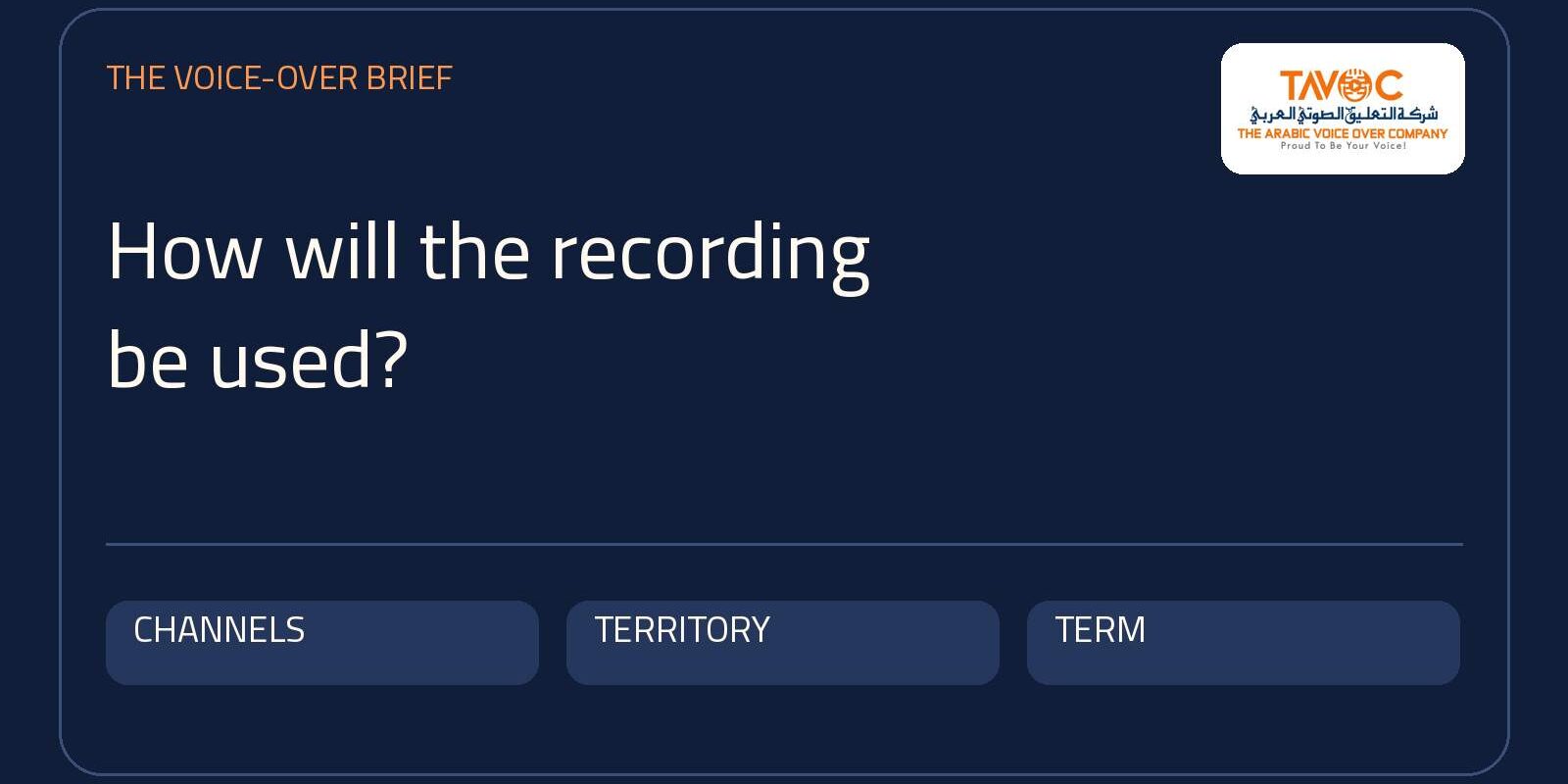
Identify the intended channels and distinguish organic posts from paid promotion, television, radio and in-store playback. Will a distributor or partner also publish the material? Raise that explicitly. Do not assume that agreement on one channel answers every question about other media or other organisations.
3. Which territory, and for how long?
List the countries targeted by the campaign. If an advertisement targets one country while the hosting page is globally accessible, explain both facts to the team. What starts the usage period, and what are its intended start and end dates? Ask what should happen to an existing post after the campaign ends and how an extension or relaunch would be discussed. These are questions to resolve, not universal terms for every voice-over recording.
4. What counts as a pickup?
A pickup is a partial re-recording, perhaps replacing a word or sentence. Separate a correction against the approved script from a later script rewrite or a request for a different performance. Ask what the quotation includes, when feedback is due, whether review rounds are specified, and how additional work will be assessed. Do not assume that revisions are free or unlimited.
A final check before use
- Does the final audio match the project and intended use described?
- Are the media, territory and usage period clearly recorded?
- Have shorter edits, reposting and paid promotion been addressed?
- Is there a clear contact and approval process for changes or expanded use?
Keep a dated summary of the answers alongside the final agreement. If documents conflict or a rights question remains unresolved, seek clarification from the parties and legal advice where needed before proceeding with the different use.
Prepare your TAVOC enquiry
For the wider production brief, see our business voice-over checklist. Then contact The Arabic Voice Over Company with the intended use, channels, countries and period, marking any open questions. This gives the team a basis for discussing scope and a quotation without assuming a price, permission or delivery commitment.